Life Down the Rutted Red Road

  • Home
  • About
  • Contact

  • Travel stories

    Recently I had the experience of travelling on Swiss trains and then travelling back into the mountains where we live. I would like the journey of life to be like the former, but in reality, it is more like the later.

    When you travel on Swiss trains, the track can be seen stretching out before you, a predetermined path, with every twist and turn known and every stop already planned. The stations are clearly marked with signposts and there is even an app that tells you exactly what train to take on what platform and when you will arrive. The trains come and depart exactly on time, with clocks around the station perfectly synchronised together by a central control. You can plan your trip with some certainty and even if you have not been the route before there are plenty of external prompters so you don’t get lost.

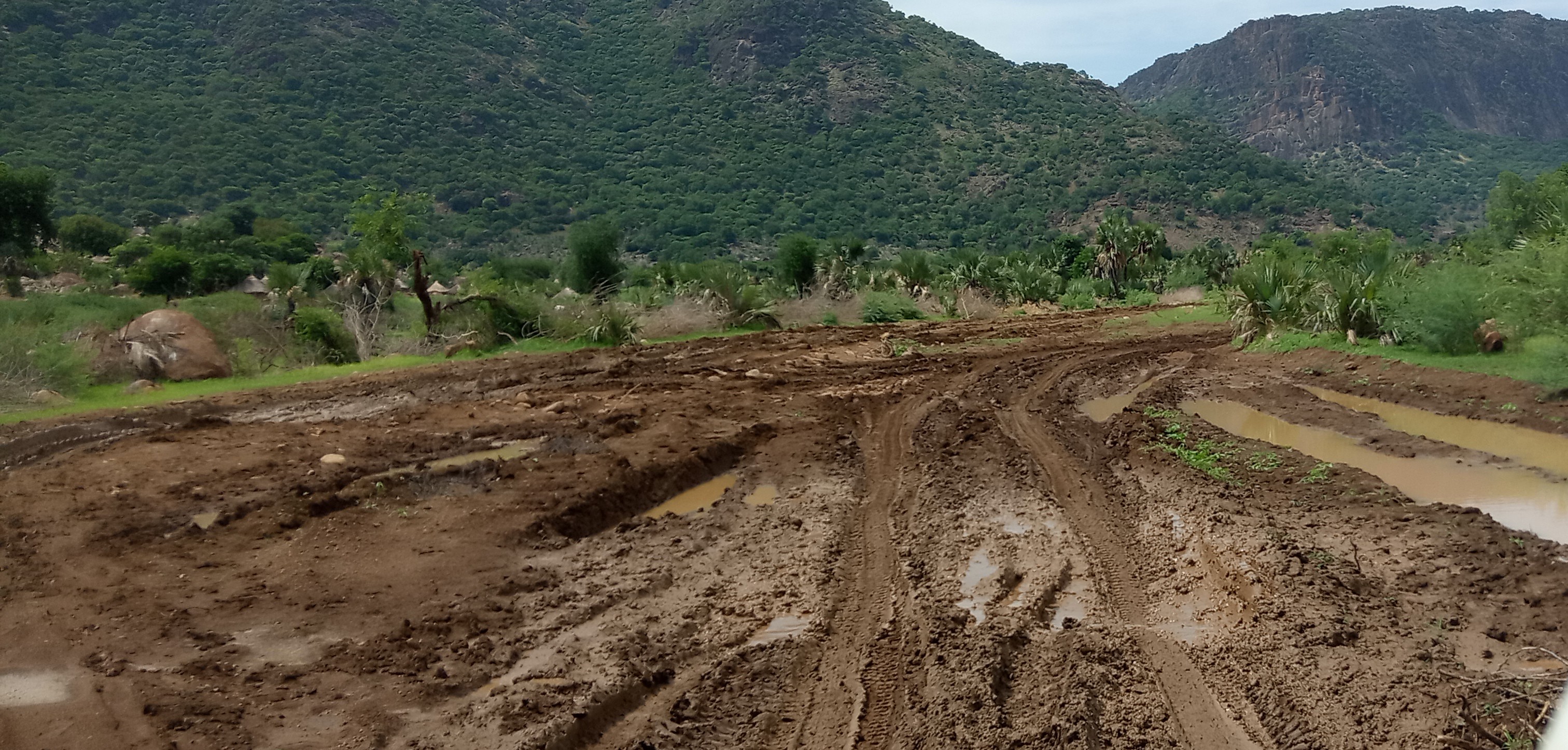
    Travelling in the mountains there are no signposts or road markings, just a weaving of dirt tracks through sparsely populated plains and hills (with no cellphone coverage) whose occasional clusters of stone and mud buildings have no signage to indicate where you are. Some of the tracks may have been used for some time, some are new detours around a particularly treacherous stretch of road. But, as you come to a divergence of paths there is no indication whether this is just a detour, or a branch in the road that is heading off in a completely different direction. Further the terrain of the land, with its rivers, swamps, rolling hills and dramatic stony outcroppings prevent setting a particular compas course and just heading in that direction. You need the guidance of those who have travelled it before, or else you will get lost.

    But, even travelling with those who know the way, no one knows how long it will take you or when you will arrive. Maybe the roads will be in good condition, that despite its strange rattles and patchwork repairs the car will actually hold together and there will be no hassles at the multiple checkpoints and you will make it in 6 hours. Or not. Most likely not. It could take a day or two (or if particularly unlucky even three).

    Swiss are known for their precision and the quality of their work. Even when travelling up steep inclines or with adjacent drop-offs, even if you may not be a fan of heights, you trust their engineering and that things will be safe and will work. You don’t feel the need to pray every time the train slows down.

    You pray when the car slows down. Sitting in the back you often can’t see the path ahead well. But the driver could be slowing down because ahead is a flooded river or puddle that he doesn’t know how deep it is or he is trying to evaluate which path across the churned up ground ahead is least likely to get you stuck or something in the car isn’t working right. So, you pray when the car slows down and then pray as it accelerates and you hopefully reach the other side. Of that stretch.

    In wet season, you expect you will get stuck, the unknown factors are how often, how badly and how long will it take to dig you out. You travel with a shovel (to rearrange the road), an axe (to cut branches to put under the wheels), a rope (if you are lucky and a tractor comes along to pull you out) and a mosquito net (in case you do have to end up spending a night on the road). There are some particularly bad patches of road, where the soil is thick and soft and churned up by all the other vehicles that have passed, and got stuck, ahead of you. Often though, you are most likely to get stuck when you are trying to go around and avoid what looks like a particularly bad stretch of road or deep puddle. Most of the puddles do have hard bottoms, you just have to trust that you will get to the other side.

    On Swiss trains you sit on a comfortable and clean seat in a temperature-controlled environment and can rest or do work in peace on your way to your destination. Personal space is respected, and apart from maybe an inquiry as to whether the adjacent seat is taken, you have no interaction with those outside your travelling party.

    Personal space and comfort, while never particularly strong cultural ideals here, do not exist in the mountain travelling car. You usually are jammed up next to whoever else happened to be lucky enough to be chosen from the dozens begging a ride. Even if it is a rare occasion where there is a little pocket of space around you, in one of the times when you are sent airborne by a rut in the road it is fairly guaranteed that you will end up falling on top of the person next to you. Or you spend the trip trying to stop the boxes and odds and ends that are stacked up 5 high from all ending up in your lap. In dry season the dust coats you. In wet season the car drips rain on you and water from the flooded puddles you drive through seeps up through the base board. Even if you were strangers at the beginning, the shared bumps and bruises and concern for the poor lady vomiting out the window and the kid trying to sleep sprawled over multiple laps and the need to pee behind a tree, makes it difficult to ignore the sweaty stinky people around you.

    If you get stuck, you are often dependent on the kindness of strangers to help get you out (or host you for the night if you have done a particularly good job of getting stuck). And they do stop and help, even if helping you out covers them in mud and might delay their own travel plans for an hour or two or three.

    So yes, I prefer Swiss train journeys. I like control and order and safety and predictability and not having to ask for help or be dependent on others.

    But that is not life in this broken world. Indeed, we often just drive the brokenness deeper into ourselves when we try and maintain control and independence.

    Instead, the master engineer has decided that the uncertainty, the getting stuck, the needing people around us, the trust required is actually what we need for the journey. For his greatest accomplishment is not going to be making an easy and smooth road but transforming us into the beautiful refractors of divinity he designed us to be.

    And there will be some epic travel stories.
    July 19, 2023

  • In remembrance

    They are scattered throughout the country of my birth: stone obelisks standing at intersections or brass plaques on city garden gates or wooden boards at the back of old churches with names etched in columns. I often stopped and read them, noting with sadness when there were repeated surnames, wondering if some poor mother lost more than one son in long ago battles in far off lands. For most there is no one still alive who remembers them as living breathing people. They are now just names, but we as a nation gather on the normally crisp morning in April, with the red flower that bloomed in the field of Flanders pinned to our chests and declare that we will remember them.

    ___________________________________

    There are no monuments here. No names etched into wood or stone so that people might know of noble sacrifice.

    It is not because the guns have been silent. Every generation in recent memory has experienced a plane overhead or a boom in the distance bringing death.

    But looking around, you cannot tell of the countless lives that have been lost protecting this land, seeking to defeat the enemy, sacrificing themselves for those they love. Graves might initially be marked with a pile of rocks, but these hills are strewn with rocks. Survival has been too precarious a thing to waste time and money on something that would not fill their bellies and which they probably could not read. But maybe monuments have also not been built because war is not an aberration, a once-in-a-lifetime war-to-end-all-wars, but simply a reality of life.

    And that reality of life has started up again, a bit further north.

    At this stage they are still reporting the numbers. The death toll is up to such and such, another so many have died in this place. But in a nation where many births happen in dark huts and are not recorded anywhere, where for many people there is no record anyway to say that they exist, how do you know?

    Even if you can count the number of bodies with bullet holes through them, can you count the little ones who died of diarrhoea from drinking putrid water because the water supplies were cut off, or those who wasted away because the price of food rose sky high and it was not safe to plant their crops (or someone burned their crops and stole their cows) or the mothers who died in childbirth because it was not safe to travel to the hospital, and even if they made it to the hospital there was no staff or supplies or blood.

    Will anyone remember these deaths?

    Even here, where this conflict is not a distant news story but has trapped the aunt who went to visit relatives or the cousin who left in search of a better life, even here, life goes on. Yes, the prices are all increasing in the market, but the skies remain calm, the bullets far away, the school bell still rings out in the morning, and the ground needs to be prepared for planting when the rains come. 

    Already so many people have died in this land, what is a few more?

    _______________________________________

    The first koinonia bread that I remember was baked by our neighbours from Hong Kong who owned a bakery. On a Saturday, my father would collect the round loaf of bread, and it would sit in its brown paper bag until being taken to the school hall where we gathered the next day.

    The next version I remember was the wholegrain loaf with the hole in the bottom from the Smiths’ bread maker. Pieces were ripped from it as it was passed around the rows. I always felt a little guilty if my piece ripped too big, but it was good bread.

    The first many times I drank it, it was just grape juice passed in tiny glass cups. Something a little sweet that I tried not to spill on my Sunday best clothes. Years later, in a room decorated with Pacific carvings, I sipped wine from a shared wooden cup. The sharpness of its taste broke some of the tameness of a sweet sip of grape juice, but then I went and sat down again on my padded seat. In a crowded Muslim city, I drank I do not know what liquid it was, alcohol being rather hard to get your hands on. But whatever the dark colour brew was, it tasted foul. But, the death we were remembering was not pleasant.

    I have sat in a row with those who share my name and that combination of eyes, nose and mouth that declare that we are related by blood, passing the items one to another.

    I have queued up in the ‘land-of-the-free’ behind others in their Sunday best glad for central heating from the winter chill outside.

    I have stood up in a line at the front of a grass clad church, refugees on either side of me.

    I have gathered in a semi-circle around a small table in an Arab city as an oil executive from the US passed it to a refugee from West Africa who passed it to an Asian businessman who passed it to me.

    Sometimes there has been rich liturgy, other times just simple words. Sometimes in languages I can understand, other times not.

    But whatever its shape or taste or associated particular rituals, we were doing it because of the generations’ old instruction, Do this in remembrance of me.

    _____________________________________

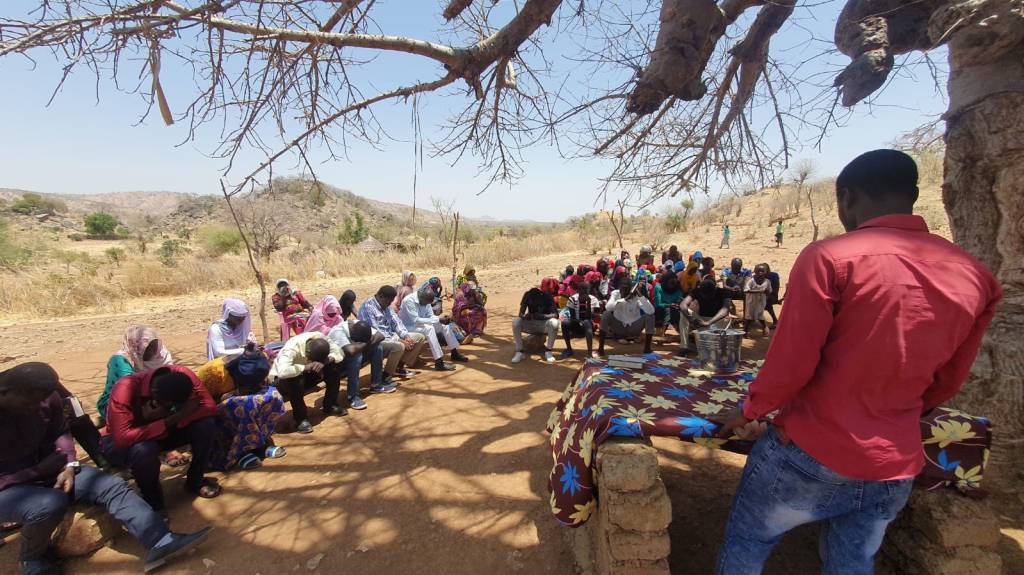
    I stand under an African tree with the sweat trickling down my back, my toob covering my head, the goats and sheep adding their music to the background, my colleagues from the hospital and my students from the school sitting around me on logs propped on stones.

    We pray for those we know and those we do not know who are hiding from the bullets and bombs north of us. Do you see them God? Do you remember their suffering?

    I hold out my hands to receive the broken glucose biscuits (I am not sure why they use biscuits here instead of the bread that is freely available. No doubt someone who is no longer remembered did it that way and the tradition has stuck). I take the red juice made from the kerikede hibiscus flowers that I first met growing wild around a refugee camp.

    And as I lift my hands and eat, lift the cup and drink, I join a line of people. Not just those standing beside me on this sun-scorched spot of earth, but in all those places where the sun sends it rays and those reaching behind me, generation on generation.

    And we remember.

    ________________________________

    In another city, in ancient times past, the sounds of battle echoed, more people dying for whom no monument would be erected. They cried out wondering if their God had forgotten or forsaken them, asking if anyone was remembering them and their suffering.

    And the words came back to them, “Can a mother forget the baby at her breast? No! Though she may forget I will not forget you! See I have engraved you on the palms of my hands….”

    Generations later, in that same city, there was a man who gathered with his friends for a meal. Knowing that he was about to sacrifice his life for them, he could have asked them to erect a monument to remember him. But he did not. Instead, he took the bread and wine that were before them on the table and said use these to remember me.

    But what were they to remember?

    When one of them stood a few days later, fearful and uncertain, not sure what to make of the tumultuous events of the last few days, the man came to him and held out hands that were now engraved with scars. Look, he said, put your finger here and see my hands. I remember.

    I am the one who remembers.

    May 21, 2023

  • Standing in the shade of trees

    When I first moved to this region, I would notice that sometimes people would stand at strange angles, have conversations in certain lines. Then I realised that they were standing to align themselves to the shade of a tree trunk (as sadly most trees lose their leaves in the hottest and driest months). Now, this angling of the body to shade, planning my path according to the pockets of shade is a normal part of life. I long for shade, I celebrate shade. Shade enables me to survive.

    _____________

    Our ancestors stood under the shade of trees in a stream-watered beautiful garden. Every day they had the choice to continuing living the life they had been given, or to choose knowledge of that which was outside their shaded haven. One day the shade looked constricting, the offer of other knowledge intoxicating and they chose to step out of the shelter. Instead of freedom though, they found out that the sun that gives life, which makes the grass grow and the fruit ripen, also takes life when there is no shade, where there is no water.

    And so, they started constructing their own shade. Living trees were cut so that dead wood that was draped with dead animal skins or smeared with mud could provide shelter in the heat of the day. Clay was shaped and packed to create cisterns to store water. And yet the shade they could construct was never enough. Termites ate through the wood and the beams collapsed. The cisterns would get cracks and dry up.

    They could not re-create the garden and the life they had known there.

    ___________________

    Generations passed. People got better at creating shade, at finding water. Cities grew, irrigation schemes were started. And yet they had not managed to recreate the garden. There was never enough, and what they did get did not satisfy. So, there was jealousy and jostling for power, cruelty from those who had it, desperation from those without.

    One day rough beams from a once live tree were dragged to a hillside and nailed together. They cast a shadow across the ground.

    Women sat in that shade.

    Mourning.

    They had hoped that maybe a new era was coming. Shelter and freedom from their suffering. And yet all they could see now was death. Blood and water spilled into the ground and there were no signs of life.

    __________________

    The sun was shining fierce in the April morning as we stood next to the decades old Baobab tree. Some of the group were lucky enough to stand in the shade caused by its wrinkled elephant-skin-like trunk, which would take maybe ten people to encircle. The rest were left with aligning their bodies to the shifting spears of shade provided by bare branches growing from the massive trunk or using their toobs to create their own shade. Every few minutes someone would stand up and move over to the battered yellow plastic 20L container and take a drink of water.

    A young man stood up in front of the group. His father was killed during the war. The boy in front of me clapped hands disfigured with leprosy. The women behind me had left sick relatives in the hospital.  The teenage girls from the high school will be married off to whomever pays the dowry their father wants.

    “Al Mesiih Gam”, the young man called out. “Akam Gam” the group shouted joyfully and they started to sing. He is risen. He is risen indeed.

    As I tried to shift parts of my body into slivers of shade and squinted up through the lattice of branches, I saw a couple of bright green shoots of new leaves sprouting. The rain is still maybe a month away, and yet somehow the tree knows it is coming and is already sending forth new life. Not enough to increase the shade, but enough to give hope that the rain is coming, the heat will not last forever.

    And we kept on singing.

    April 22, 2023

  • Longing for Home

    It has now been quite a few years since the land of my birth was the place of my everyday home. When I am not there, I miss being able to walk down the street and have no one pay me any attention because I look like I belong. I miss being able to go for a walk in the bush without having to worry about snakes, scorpions or landmines. I miss hearing small talk and being able to understand the cultural references (okay, I was never particularly cool so there were always some cultural references I didn’t get, but those references about the rugby last weekend, or Whittaker’s latest chocolate flavour or that Mitre-10 ad).   I miss the subconscious knowing how events and social occasions will work, the unconscious rhythms of life. I miss being able to walk through an airport and not have to justify why I should be allowed into the country.

    Sometimes I long for home. For where I belong.

    And yet when I get to this ‘home’ it is not home either. My siblings and friends have moved on with their lives. There are different shops, different cultural references and a new way to use an ATM card. I am very aware that this is not my life.

    It is not just that it has changed – but that I too have changed. My old home, my old place of belonging can no longer fit like it used to, because my shape has changed. Not just the extra lines on my face and my decreased tolerance for cold and some new mannerisms. You cannot see what I have seen and be unchanged. Even though I am not completely immersed in this other culture, the prolonged contact with that which is other is shaping and changing me.

    And so, I find myself longing for something that doesn’t exist.

    ___________________

    I have lived amongst refugees in a refugee camp just over the border from their homeland. To hear them talk about the Mountains, you would think it was Eden. It is cooler there, greener there, better there. The fruit there is abundant. There is no stealing. Children are well behaved.  There they are not sitting waiting, dependent on other people for a handout.

    And yet, though a ceasefire has been holding for quite a few years, some have chosen to remain in the dusty hot camp that is not their home. They have chosen, for various reasons, to not go home.

    _______________________

    I have lived near refugees in a large city in a nearby country. They are waiting, year upon year, in crowded apartment buildings where their kids cannot play on the street due to abuse from the locals. They are waiting for when their refugee papers might finally get to the front of the refugee reallocation queue so they will be assigned a new country. Some of them have been waiting for over 10 years. Some of the parents long to return to the Mountains, the land of their birth. But they have been pushing for so long to get to this “better future”. Their kids have grown up in cities with running water and electricity and internet and the ability to buy whatever they want (if they have the money) from the shops on the street corners. Could they take their kids back to houses made from mud bricks, where water must be carried from the local water point or river, and where unless they are one of the lucky few who get an NGO job, they will have to farm to have food to eat? Would their kids even know how to survive?

    So, they wait for the country lottery, to find out where they will be assigned. To get to go to their new home: yet where they will not look like the locals, not speak like the locals, dress or act like the locals. There they will be the new refugees. The outsiders. Though maybe their children, if young enough, or grandchildren might come to call it home.

    ________________

    Now I am in their homeland. This place where the land is their land (well that which isn’t still under the control of their ‘enemy’).

    There is a noticeable difference. There is less crime, less insecurity and fear of people in uniform – because their own people are controlling this land. People do take time the time to plant and water fruit trees that will take several years until they produce their first crop. Some people take time to burn bricks for building their houses, rather than just using mud bricks, because these are their houses on their land (though decades of conflict do make people adverse to spending too much on what could easily be destroyed). It is cooler and greener than the refugee camp (though this is relative, for in the dry season it still is brown barrenness and the temperatures still do reach to the 40s), and the fruit is available for more months of the year.

    But the roads are basically impassable for several months of the year. Many people still get water for drinking out of hand dug wells in the riverbeds (where cattle also drink). Health clinics are few and far between and often do not have medications or trained health staff.

    One of the doctors I work with uses the phrase “Kakuma syndrome” to refer to various psychosomatic symptoms that present in young people who have returned to the Mountains. Many of them were sent away at 5 or 10 years of age to various refugee camps in the region so they could get an education. They spent 10 or 15 years there studying while hearing about the Mountains, the promised land, their home. Yet, on their return, they too have found that they do not quite belong. Now that their eyes have been opened to the world that is bigger than these mountains, they feel trapped in a place where many people have not travelled further than several villages away and for whom the outside world is still very much unknown. After studying for years, of feeling like they have gone ahead of the generations before them, they find they still must wield a hoe by hand under the burning sun if they want to survive.

    ————————————–

    And so, we all find ourselves longing, longing for that which doesn’t exist, except in our nostalgic memories. We go through life, seeking to make place, to send out roots of belonging, while being aware that we are never fully home. We grow and change, sometimes with scars, sometimes with blossoming, and yet this necessary movement of life also takes us further away from being “at home”.

    And we can’t go back.

    ________________________

    There was a garden. A garden with fruit trees and plenty of water. A place of beauty and joy and rest. It was gifted as a home, as a place for the man and his wife to grow and thrive and be.

    And yet, for them it was not quite enough. They gave into the whisper of longing for something more and they found themselves on the hot, barren outside, looking with longing towards the home they were now barred from entering.

    They died without getting to return ‘home’. So did their children and the generations and generations that have passed since that time. Still the whisper has remained, the longings threaded through the stories around the campfires, the steeples reaching towards the sky and the posed photos posted for the world to see.

    And yet we can’t go back.

    Not just because that garden has not yet been located on a map. Even if it was, its borders could not contain all those who continue to long for home.

    But we can’t go back, because ‘our shape’ would no longer fit its sense of home. Yes, because of the brokenness that continues to scar our forms, but also because of our growth. The richness of the myriad cultures through the millennia have grown deeper and broader than a man with a hoe in a garden (though there is still a beauty and a good in that).

    ___________________

    He was born while his parents were on the road, away from the little backwoods village they called home. Then, while he was still young, they had to flee as refugees to a neighbouring country to escape the sword of a maniacal ruler. Eventually, they were able to return to their hometown and he grew up amongst the children of the village, so at least by the time he was an adult no one mocked him for a strange accent. As an adult he travelled from village to village, a few days here, a few weeks there, teaching and talking about a kingdom that was coming. But he warned those who wanted to follow him that even though the other animals had homes he didn’t.

    But then, one night he told his closest friends that his returning home to his father. Returning to the place that was his, where he could be seen as he truly was. He told them he was preparing a place, a home for them and would come back to take them to that home.

    How could they be at home in a place they did not know the way to, where they had never been, that was not theirs?

    Ah, but he told them with joy, it will be yours, for I will make you my brothers and sisters. You will fit because I will make you like me.

    Then he left. He has not yet come back.

    So, for now, we are left with this longing, this longing for home. While we must live with the grief that we are not able to go back, we are given hope. This longing we have is not a longing for something that does not exist. This is not a longing that we can only meet by stagnating, refusing to change and grow.

    Instead, it is as we grow, as we allow ourselves to be chipped away at here, moulded there and purified by the fires of sacrifice and love, that we are preparing ourselves and moving towards finally being at home.

    And it will be home.

    And we will be at home.

    And it will be glorious.

    May 29, 2022

  • 10 lessons in 10 years (the not serious version)

    This may make more sense if you read the other version first.

    1. I may not be God but if I want someone to call me that I can give them ketamine and pray with them just before they go to sleep….

    Legally done, of course, as part of a doctor supervised procedure. The doctor in one procedure was called “King of glory”.

    2. While, God’s sense of humour may be strange, sometimes I may need to apologise for mine.

    I started out with a dry sense of humour, then I started working in an emergency department, then I moved to a country with a very dark sense of humour, then I lived a war zone. So….

    3. The smooth and shiny of the television ads for shampoo is not helpful if you want your head covering to stay on your head and not fall off 15 million times.

    4. “You are my sister from another mother”, is not just a turn of phrase.

    When you ask someone how many siblings they have (which is an important question because your birth order in your family determines your “little name” (nickname)) and they have to stop and count you are probably dealing with that situation.

    5. “Are you booked?” means “Are you engaged to get married?”

    Is that an 0800 number?

    6. “Somehow” is a very useful word for answering the “how are you?” question when your day is not quite a box of fluffy ducks.

    Living with non-kiwis for nearly my whole time I have realised there are quite a few kiwi slang phrases that are not non-kiwi general knowledge.

    7. While God may not waste my time, other people seem to love to.

    Patient histories tend to go like this:

    “Why have you come today” “I’m sick”. Naturally.

    “What are you sick with?” “My stomach”.

    “What is the problem with your stomach” “It pains”.

    When did this start?” “Long time”

    “A day, week, a month, 10 years ago?” (Long time can mean all those things). “The other day”.

    “What day?!” “Tuesday”. Why didn’t you say to begin with!

    8. If you are not royalty but you want practice in a genuine situation doing the royal wave while people (well, mainly children) come running to the road side as you pass shouting your name (well shouting “Khawaja (Other!)” – but you hear it so often it might as well be your name) you can move here.  

    9. If we happen to meet and go to shake hands and I grasp your forearm instead or touch it with my forearm – just blame it on coronavirus.

    Don’t think that I have adopted at all any weird customs from the people that I have been living amongst.

    10. If you ever want to sing a song that says “Satan, you loser, loser” in church, you also should just move here.

    Personally I struggle to sing it with a straight face, just imagining all the older gentlemen in their ties and shirts singing it back in my passport country. (The song does start out as “Jesus, you are winner, winner”)

    January 30, 2022

  • 10 lessons in 10 years

    1. I am not God.

    If you had asked me if I thought I was God, I would have been shocked at the question, “Of course not!”. But then I would go home in an internal mess (only on the inside – of course, I couldn’t let it show on the outside) because I hadn’t been able to save the life of a child, that I hadn’t been able to make my teammate happy, that I hadn’t been able to bring peace to my town, that the week had not turned out like I had planned. In short, that I hadn’t been able to be God.

    It took a few years to realise that, though I would never say it, functionally I had been thinking that I was.  And yes, I still beat myself up internally if I think there is something I missed and a child dies, but I am better at releasing the outcome into his hands. Yes, I still want everyone to like me, but I am slowly coming to own that I am not responsible for others’ emotions. I still plan out in my head the week ahead – but am better at holding those plans loosely (or more realistically I have just got better at making 50 different plans aware that maybe one of them will work). And just in case I am tempted to start picking up those heavy burdens that aren’t mine to carry I wrote it down, decorated it with some pretty pink craft flowers and stuck it on my desk, “I am called to follow Jesus, living in dependence on him, remembering that he is God and I am not….”

    2. God has a strange sense of humour.

    When I was in high school, if you had written a list of everyone in our class of those most likely to 1) live in a war zone, 2) stow away in an old Russian Antanov (well, it is not really stowing away if the pilots know you are there, but sitting in the back on piles of goods feels like you are stowing away) 3) enjoy riding on the back of a motorbike, it would not have been me. In fact, I would have been one of the very last names on the list. I am a quiet homebody by nature. My hobbies are doing puzzles and cross-stitch (even when I was a teenager). I don’t sit wondering what adventurous thing I should do next. And yet I have done all the above. I have been given the privilege of being an ordinary person in some not-quite ordinary circumstances. And I sometimes wonder if God is sitting up there with a little grin on his face (metaphorically speaking) saying “what shall we make happen today….”.

    3. I like wearing a head covering and clapping and dancing in church.

    I grew up in white, conservative-enough church circles that I did come across occasional women who wore a ‘head covering’ in church (though I was never convinced enough or willing enough to be that weird to do so myself) and we didn’t (unless we were being very brave or it was a special occasion) clap to music in church. We definitely didn’t dance.

    Here, I wear a head covering and I clap and dance in church. And I enjoy it.

    In this area women nearly always wear a covering over their heads outside their homes, whether a loose scarf or the full body wrap-around toob. To show respect, I generally wear one too. And, instead of finding it repressive (as had been my view), I find it freeing. It is a shade for my head from the burning sun, a shield from the guys eyeing my up as I walk past, and as I sit in church with its pressure resting on my shoulders, I am reminded of the Father who covers me with his wing of protection.

    In church there are no hymn books, no bulletins, no powerpoint displays. Some random person starts singing a random song, and then others join in. The words are often incomprehensible. So, I am often reduced to making vowel sounds and the occasional Yesu at the right times. But, I can join in the movement and posture of the worship around me, the hands clapping and the feet moving.

    And so that is what I do (now, if you looked at me from the back with my toob on I might even pass as a local). Pleasing everyone (or no one) in the church cultural divides – but choosing to worship with the people he has placed me with.

    4. I am not as good at relationships as I thought I was.

    Prior to moving overseas, I never had relational problems with people (ok, maybe excepting my sister during our teenage years, but isn’t that what is meant to happen). I knew I was an introvert, and I didn’t have a huge number of friends, but I didn’t have any bad relationships. I thought I could do relationships.

    And then, I realised being nice to people who you see occasionally, or even getting on well with your family members (who are all conflict-adverse people to begin with) does not make you good at relationships. It does not prepare you for living day-in day-out in a stressful environment with people from different cultures and backgrounds, people who had to be rather driven, focused and passionate to go against the tide of ‘normal life’ to reach this place. And who are all now trying to work together. Sometimes it is not pretty. Often it is not. And I soon found out how far short I fell in relationship skills and loving people well.

    I still fall short (though I have learnt a heap about myself along the way and picked up some skills on the side).  But at least it gives this goody-too-shoes girl something to confess.

    5. I cannot avoid conversations about my singleness.

    Talking about relationships, my lack of marital relationship, of not even being “booked” (the local phrase for engaged) is an anomaly in this culture. And, they are not shy about pointing that out and discussing it. Often. In fact, after my name and various medical conditions it is probably the most common conversation I have.  While these conversations are sometimes funny, other times excruciatingly awkward (thankfully, I don’t blush quite as easily as I used to), or on a day when I am already struggling with the issue simply painful, I have found it is the easiest way to bring up the God issue. For really, what other reason in their eyes is there for me to be 35 and still single. In fact, sometimes I now even show a picture of one of my nieces or nephews (other than because they are very cute), because I know it will lead to that conversation, which can lead to talking about a lot of deeper things.

    6. Lament is an important art.

    But that doesn’t mean that I don’t grieve some aspects of my singleness, of the tragic situations I see every day at the hospital, of the wars that have plagued this region (not that I am putting all these things on the same footing of grief).  And as I have grieved, as I have seen injustice and deep loss, I have learned to value the gift of lament. That I don’t have to pretend, to myself or God, that this doesn’t suck, that it doesn’t hurt, that it isn’t wrong. And, I can tell God so.

    And now, occasionally a tear can even squeeze past my stoic control.

    7. God does not waste my time and experiences.

    There definitely have been occasions for tears. I am in my fourth location since moving overseas, the first two I had to leave because of security issues, the third one I was reluctantly at while we were initially denied moving to location four. None of them were moves or changes I would have chosen. And yet, I could not be doing what I am doing now, if not for all of them. There is now such a web of experiences and relationships and connections that have been built because of those different moves, that I can flourish here in a way that I wouldn’t have been able to without them. That is not to mention all the “oh I was just reading about that” or “I did have one patient with that” or “I met this person last week” that just seem to happen.

    8. I am always going to be an outsider.

    I think I came with romanticised ideals of who I would become: I would learn the language, dress locally, make friends, become one of them. None of this living behind concrete fences in a nice separate western bubble.

    Yet, ten years in, although I may live in a house made from mud bricks and have an outside latrine (though we do have water and lights which significantly lifts us above most of the local population), there is still so much I don’t understand. My language is still halting. I still make cultural faux-paus (or just sit in a gathering with no clue what is going on). I still get led to a seat of honour (even though as an unmarried female I should be at the bottom of the hierarchy). I have developed a couple of ‘local’ relationships – but there is still this massive gap between “my world” and “theirs”. I will never belong fully. I will never become one of them.

    But God didn’t ask me to. He didn’t make me with their beautiful ebony skin. I’m patchy white, with brown moles and hair on my arms. He has brought me to this place because I am different, because of what my difference can contribute. Though I may not belong, I can choose to be present (even if I am confused).

    9. I am not changing the world, but I am being changed.

    I did not come simply aiming to be present. In fact, I am very bad at just being present with people (hence why I became a nurse or you will often find me doing the dishes at a large social event). I had absorbed the motivational challenges of my youth and I wanted to do something significant with my life. To make a difference. To change the world (well, my aspirations were never that grandiose but heading in that direction). I remember thinking in the first location that I lived in that this wasn’t enough: I lived in too nice a house, too many of the people were already Christians. I needed to do something more radical. God sent a civil war to that location, so I suppose he answered that one.

    But the reality is, most of my life is not glamorous. It is lighting the charcoal stove in the morning. It is reviewing spreadsheets and walking the wards of the hospital. It is buying tomatoes at the market. It is reading a piece of fiction in the evenings. Sometimes, I look back over a previous year and think, have I accomplished anything, other than a lot of chasing after the leaves tossed around by the wind? Yes, there are particular people that my being here made a change for them.  

    But, I think the main thing that has changed, has been me.

    10. God is faithful.

    In all this God has been faithful, even when I have not been, even when I have not seen how what is happening could be him being faithful.

    I have laughed and I have grieved. I have met some remarkable people. I have got to do some amazing things. I have been scared and filled with wonder. I have come to hunger a little more for heaven and to hate evil more. Sometimes I have been able to actively cling to promises, other times I have just been an exhausted heap in his arms.

    I am still alive and still able to laugh (which should not be taken for granted).

    And though I still have many questions, and there are definitely times where protest, “God, do I really have to go through this lesson, again”, I now have story after story I can look back on and say, “You were faithful”.  

    January 30, 2022

  • Why not?!

    A bride’s hands decorated with henna.

    I am not married. I never have been.

    In Sudanese eyes this is a rather incomprehensible thing. And, they are not particularly subtle about it. I almost make it a game to see how many minutes it will take after I have met someone new to get to the series of questions:

    “Do you have any children?” No

    “Do you have a husband?” No

    “Why not?!”

    The average is probably a generous ten minutes.

    Everyone gets married.  They even have polygamy which ensures that since men are more likely to die in battle (or from doing something stupid) the surplus women will still be able to have husbands. It is assumed in their language. You are either a girl or a married woman – there is no word for an unmarried woman. And the root word for a woman without a man is related to the word for suffering.

    And so, out of their love and care for me they have offered, many times, to resolve my terrible suffering. I have had brothers offered to me, once even while the future sister-in-law who was kindly volunteering him was literally in the midst of pushing out her baby. Sister, how about we focus on you having this baby and talk about that later.

    I have had sons offered to me, even if they still happen to be in primary school.  Umm, I am older than I look.

    I have had husbands offered to me by their existing wives, often after said wife had just delivered a baby and I had managed to stop the baby crying. In such circumstance I wasn’t sure how much they wanted a co-wife and how much they just wanted a baby minder. Sorry being a co-wife is in my ‘never going there and if I do start to think about it please take me to the mental asylum’ basket.

    I have had men offer themselves, or more often the case, simply state, “I will take you to be my wife”. Probably the most original line I had thrown at me occurred one time as I walked into town past a group of youths lounging near the bridge. “Sister, where are you going?” a young man called out, “your husband is sitting right here”. I almost stopped to congratulate him on his clever line. Almost.

    Even if they don’t have a handy relative to offer to me that does not stop the discussion from proceeding to the “why not?” part. Particularly when they learn that I am not even booked, though it did take me a while to work out that means to be promised to someone.

    Over time I have used a variety of explanations for my marital deficiency. If the question came up at work, I often responded with “men are too much work” or “I am too busy”. They agreed with the fact of these statements, but not their validity as excuses, for, of course, I could just pay them to do my household work.

    In some other settings I would declare that “I am too expensive” or “my father doesn’t like cows”, cows being the usual dowry payment made to the family of the girl. I didn’t tell them that my father prefers sheep which are, in their eyes, much cheaper and inferior animals. But then they would declare they would pay whatever was required. If I added, “okay, but my father is too far away to negotiate said matter”, they would remind me that though they may live in mud huts with no running water they do have cell phones.

    If I was in a more spiritual setting I sometimes responded with “God is enough” or “I am waiting for God to bring me someone”. Though I was discouraged from the later answer when one lady’s retort was, “God is bringing them, but you are refusing”. Well, yes, I am. Have you seen the last five who asked me?

    And though sometimes the questions annoy me and sometimes they just make me laugh, they do reveal what my interrogators values.

    Relationships. Family. Children.

    In the country of my birth, often one of the first questions on meeting someone is “what do you do?” Yes, family is important, but often the sense of identity and worth is more enmeshed with what job you have or where you live or what you own or even how you spend your free time. There can still be that awkward pause when it is revealed that the person doesn’t have a significant other, which information may have been extracted by a delicate enquiry such as, “who do you live with?” or just deduced from general questions about hobbies. But even this awkwardness is brushed over by the reassurances that at least you have a great job, home etc. Now there are those unfortunate enough to have neither relationship nor job, but as this just gives more time for chillin’ at the beach often not too much sympathy is aroused.

    But back to those questions from my neighbours and the man selling me sugar and the woman I am examining at the health clinic, questions that by my cultural lens are rude inquisitions into something that is none-of-your-business-thank-you-very-much, they are really just asking “what is your identity?” For to them relationships are what defines who they are, their identity and their worth. And is this not a better definition than a job title or post code or the latest trophy purchase?

    So how am I to respond to their questions?  If I choose to embrace their value of relationships, I can no longer skirt their questions with excuses of busyness and work, anchoring my importance in the “great work” that I am doing. I must wrestle with my own sense of identity. But without work to hide behind this can be a fearsome thing. They are waving in my face the insecurities that come with my single status.  Who am I if I am not a wife? If I am not a mother? Why have I not been chosen or become the beloved of another? Is it some failure or lack in me? It is easy to start to think that I am not worthy. That I have failed. That I have not been enough of something.

    And in some ways, those things are true. I am not enough. I have failed. I am not worthy. But, that is the case for everyone, even those who happen to have a ring on their finger and have supplied a satisfactory number of children.  

    But, thankfully, my worthiness or ability to assemble the magic constellation of characteristics, whose secret formula I have obviously not worked out yet, is not the basis of all relationships. There is another relationship in which I can anchor my significance.

    And so, my answer to the inevitable questions has simply become this: God is my Father. I am his daughter. He is the one making the arrangements. You discuss it with him. But, mind you, I am not agreeing to anything unless he has spoken to me as well.

    September 23, 2019

  • The tooth of despair

    (warning this post contains some references to feminine stuff)

    My current world is one of dictionaries and word lists, red lines over my homework and a whiteboard full of words that refuse to surrender to my brain’s memory bank. My tongue stumbles again and again on particular words and my teacher threatens to start charging me chocolate every time I pronounce a letter wrong, again.  Out of consideration for her health and weight I have not yet acquiesced to that suggestion.

    All this effort is in pursuit of learning the local language. I do not particularly love the process of learning it and would much prefer to be doing something. But, I want to be able to buy fresh fish, not the dried stuff that you can smell from the other end of the market. I want to be able to see a patient in a clinic and not have to make educated guesses about what they told me. I want to have a conversation about my marital status without worrying that I just agreed to marry some relative. I want to be able to sit with a grandmother and listen as she tells me of days before I was born. I want to learn so I don’t look completely stupid all the time.

    But I also want to learn because the way a culture use words, and often the very words themselves, reveal how the culture thinks and what it values.

    The other month I learnt a new word: sinn al ya’s, which literally means the tooth of despair. (Ok, the word sinn could refer to tooth or year – but tooth sounds more dramatic. Maybe that is where we got the English phrase long in the tooth). It does not refer to tooth ache or depression. It refers to menopause.

    I double checked my dictionary when I first read that. Menopause. The tooth of despair? Isn’t that a bit dramatic? I know menopause can toss emotions around like the whirls of dust in the dry season. But, really? Having your period can be a pain. Literally. Not to mention the pain of childbirth. You would think that these women after 14 babies would be celebrating they do not have to do that again.

    I learnt this word as part of conducting a birth attendant training for refugee women. Many of them had some experience as the ‘village midwife’ but many of them had not had the opportunity to learn to read or write.  I have conducted this training several times now, and each time one of the favourite topics has been the female reproductive cycle. For most of them, this is completely new information and it takes a bit of time for them to get their heads around it.  But once they do start to understand, then they want to know what it means when someone does not have their period.

    Although most community education programs include this topic for the purpose of teaching about family planning, my attendees main concern is infertility. Sure, sometimes they would prefer not to be having their eighth child before they turn thirty, but babies are delighted in and having children is seen as the main purpose in life. And when war is added to the equation, it is also seen as replacing those who have died and a way to resist those who are seeking to wipe them out.

    But infertility, that is devastating for a woman. For, of course, it is her fault. For after six months, one year or if he is being really patient maybe two years without producing a child, her husband is likely to get another wife. Then she will have no guarantee of someone to care for her when she can no longer carry the 20L of water on her head from the village water point.

    Talking about infertility leads to talking about menopause. I couple of months ago I met up with a friend in a neighbouring country who is doing similar training. She is discovering how so many women there are completely ignorant about menopause, as women are only now starting to live to an age past menopause.

    Back to my training, there was one participant whom I shall call Seima. She was not the brightest of the lot, but she was vocal in her participation. After we discussed that the normal age for menopause is 45 to 50, she pipped up quite concerned, “I am only 36 and I have not had my period for three years. What could be the problem?”

    I am always hesitant to guess ages. Some of the women have such beautiful unblemished skin that you might think them younger than their age. Others of them, due to their hard lives, find old age early. Yet, even I could admit that Seima looked nowhere near 36. So, my co-teacher, a midwife but also a refugee, started a series of questions to try and get some idea of Seima’s approximate age.

    “How old is your first child?”

    “He died.”

    “Ok, how old is your second child?”

    “He’s big”. That’s helpful.

    And then the question that would never be part of my background, but for them is how they date things, “During what war was your child born?” And Seima told a particular one.

    “So, then he would be at least 30 years old. Seima, I am sorry you cannot be 36. You must not be having your period because you have reached the time of sinn al ya’s.”

    After that, Seima sat subdued for the rest of the session. Who am I to say this is not the tooth of despair? At least it means that children are desired and valued.

    Just do not get me started on the fact that the word for a single woman is closely related to the word for suffering.

    July 23, 2019

  • Travelling through the wilderness

    I recently travelled through a wilderness. Not one of those New Zealand ‘wildernesses’, where plants still blanket the hills and birds still chatter but the palette is muted shades of brown rather than vibrant greens. A wilderness, wilderness. Where there is sand and rocks. And more sand and more rocks. And a very, very occasional blade of grass in a sheltered crevice. That kind of wilderness. Where as far as the eye can see, which isn’t actually that far as the dust obscures the horizon, there is brown rock. Nothing else.

    Although I am normally a green plant and blue water kind of girl, I didn’t mind going through the wilderness. I was in an air-conditioned car. The road had good signposts telling us which way to go. We even had a GPS tracing out our path for us and telling us there was only one hour until our destination, which was back in my preferred green and blue world. I knew where I was, I knew where I was going, and I knew I would soon be out of this wilderness. I could even appreciate its stark beauty, the cool air blowing on me insulating me from its harshness.

    Sadly though, that doesn’t seem to be how God normally does wilderness experiences. Instead, when he rescued his people from slavery, the first thing he did was lead them into the wilderness, with the instructions to wait here until I say move. And when he did say move, he didn’t give them the next thirty-day plan. He simply showed them how to get to where they needed to set up their tents for another night. And that was all. Until the next day. When they were hungry, he provided them with the food they needed for that day. They did know their end destination but not the route they would take to get there or how long or how hard it would be until they arrived. They had no air conditioning.

    I don’t like that kind of wilderness adventure. I like knowing the plan, because then I can pretend that I am in control. I like knowing what is around the corner, so I can be prepared and then able to help everyone else (and so then they think I’m great). I like being able to take care of things myself instead of being stuck in the middle of nowhere with no water and being in desperate need. I like being able to say I trust God, without actually having to put that into day to day practice.

    Though I might like this control and competence, they are not actually good for me. They obstruct the flow of life and so desertification starts creeping into the edges of my soul.

    And so sometimes God knocks on my air-conditioned window and calls me out of the car to follow him down not even a track into the wilderness. And he doesn’t tell me where he is taking me or for how long we will be wandering around in this unknown. He simply says trust me.

    May 20, 2019

  • Dry season

    It is now the dry season. It has not rained for a couple of months and will not do so for another four months or more.  There is still a tinge of green in some plants and some of the animal drinking holes by the side of the road still have some murky water dampening their bases, but that memory of rain is not going to last long. Already children have started digging in dried-up river beds to find water for them and their animals to drink. Dust from the drying earth and ash from post-harvest burn-offs mingles in the air creating spectacular sunrises and sunsets before settling as a red blanket on every surface.

    The ground thirsts.

    In the mornings I wake up to the sound of the girls chattering as they go to the water point in the not quite dawn light. I hear the particular squeak of the wheelbarrow that our neighbour uses to bring our water. (Males only transport water if they have something to cart it with such as a wheelbarrow or bike or donkey cart. Females carry the 10 or 20 litre containers on their heads. And I, being neither graceful enough nor strong enough to carry it on my head, pay the neighbour boy to bring it).  Oh good, maybe he is going early to get water for us. Or maybe not, and we will spend the rest of the day trying to find him as we watch the water in our barrel get lower, using and re-using water so that we still have enough to drink.

    In the nights I wake up to my two-year-old neighbour’s cry, “Ana daayir mooya. I want water”. It is the first sentence he learned to speak. It is his most frequent statement. He guzzles from his bottle and goes back to sleep. I peel myself off my foam mattress, to which most of my body water seems to have transferred, and I also take a mouthful or two from my water bottle. 

    I thirst.

    This coming year Ramadan will fall at the border between the dry and wet seasons. Maybe the rains will come on time and we will dance in the water that marks the end of the hottest time of year. (Okay, maybe only the khawajaat are crazy enough to dance in the rain – the Sudani are too worried about getting their clothes dirty and having to carry water to wash them). Or maybe the men and women will sit in the dry, dusty 45° heat and not swallow a drop of water from dawn to dusk. I get to ten in the morning and already the thirst drives me to drink another cup or two of water. And yet, out of discipline, out of devotion, or pressure or pride they do not.

    There is a problem with the water points. This one’s pump has stopped working. For that one the people have delayed in bringing the diesel to run the generator-powered pump. The queues grow. Children spend their days waiting at the water point for their jerrycan to get to the front of the queue. The chatter in the early morning becomes desperate questions about where to find water.

    They thirst.

    ———————————————–

    There was one time where for three days they travelled in the desert without finding water. When they did find it, it was bitter. Another time they were directed to camp in a new place, but when they arrived there was no water: no spring, no wells, not even a dried-up river bed.  And they were not just a few: 600,000 men plus women and children and animals. Even if they only used water for drinking and walked around with cloths in their noses to block out the smell of unwashed bodies and clothes – that is still a lot of water and a very long queue of jerrycans. They cried out against their leader, “You have brought us to this place to die of thirst!” They grumbled. They complained. They even wished to return to the place where they had toiled under the lash of whips.

    From our comfortable West where water always comes out of the tap and a single flush of the toilet is 20 litres down the drain, we role our eyes at their grumbling and want to point out that they got free food for 40 years – so what were they complaining about.

    And yet here I sit in my bit of shade (oh shade, it is such a wonderful thing) with my drink bottle sitting next to where I write, and I wonder that they waited three days. I would be complaining after a couple of hours.

    We thirst. We cry out.

    And the leader was told, “Go strike that rock”. And he struck the Rock and water flowed out from that place that had been struck.

    And they were satisfied.

    January 11, 2019

Next Page

Blog at WordPress.com.


Loading Comments...
 

    • Subscribe Subscribed
      • Life Down the Rutted Red Road
      • Already have a WordPress.com account? Log in now.
      • Life Down the Rutted Red Road
      • Subscribe Subscribed
      • Sign up
      • Log in
      • Report this content
      • View site in Reader
      • Manage subscriptions
      • Collapse this bar